TrackForge
Procedural Track Generation Tool for Unity
GitHub RepositoryOverview
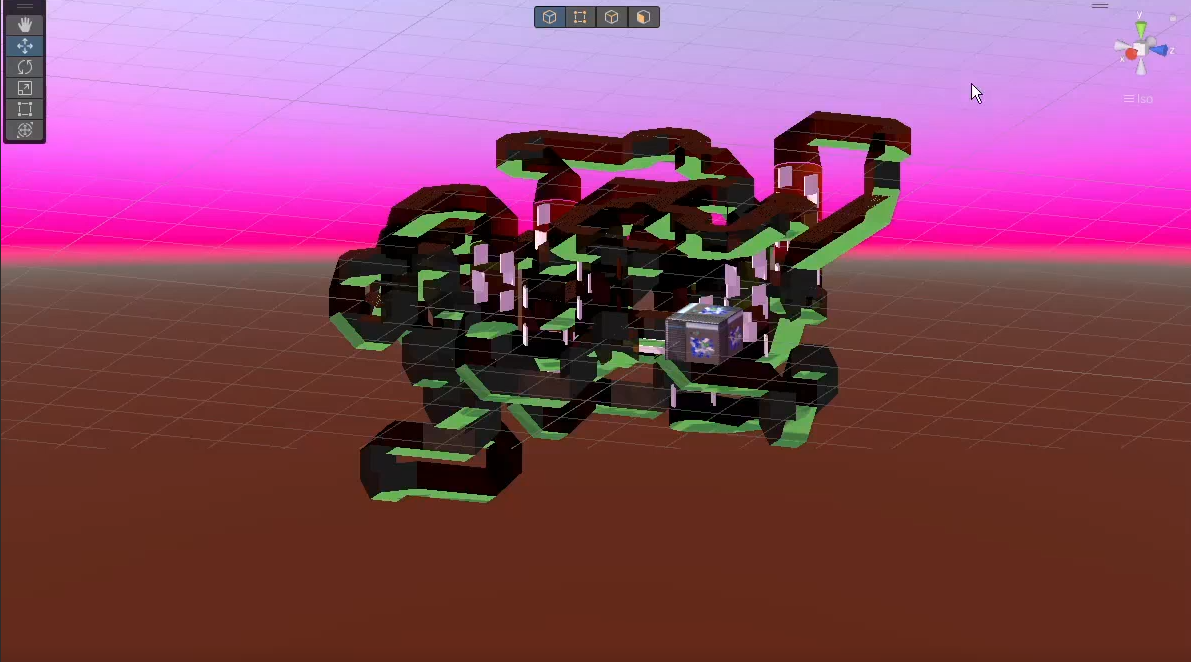
TrackForge is a procedural generation proof of concept for building playable 3D racecourses in Unity. The generator accepts a size constraint, then repeatedly places and validates modular course sections until the target length is reached. This removes much of the manual work of designing racecourses while creating a different layout each time the tool runs.
The Problem
Designing race tracks by hand can be both time-consuming and
difficult to scale. While handcrafted levels allow for carefully
designed experiences, creating enough unique content to keep players
engaged requires significant development time. Procedural generation
offers an attractive alternative, but generating tracks that are
both varied and playable presents a challenging algorithmic problem.
A procedural racecourse generator must ensure that every newly
placed track piece connects correctly, avoids intersecting existing
sections, and leaves enough space for future expansion. As the
course grows, the number of valid placement options decreases,
making it increasingly difficult to generate complete, error-free
tracks.
My Role
Solo DeveloperI designed and implemented every aspect of the project, including the procedural generation algorithm, Unity systems, gameplay mechanics, and debugging tools. I was responsible for designing the data structures that represented track pieces, implementing placement validation and collision detection, and iteratively refining the generation logic to produce varied and reliable racecourses.
The Solution
I developed a procedural generation system in Unity that constructs
unique 3D racecourses from modular track pieces. The generator
incrementally evaluates every potential placement for the next
segment, validates that it does not intersect existing track
sections, and selects a valid continuation.
The generation process continues until the desired course length is
reached or no valid placements remain. This approach produces
playable, varied tracks while reducing the need to manually design
every racecourse.
Key Features
- Generates a unique racecourse for every session
- Builds tracks from reusable modular pieces
- Prevents overlapping or intersecting track sections
- Validates connections between adjacent track pieces
- Allows configurable course lengths
- Creates fully playable layouts without manual level design
Technologies
- C#
- Unity
Engineering Highlights
Procedural Generation Algorithm
The core of the project is a procedural generation algorithm that
constructs unique racecourses from modular track pieces. Rather
than following a predefined layout, the generator continuously
evaluates valid placement options, ensuring each new segment
connects correctly while maintaining a playable course.
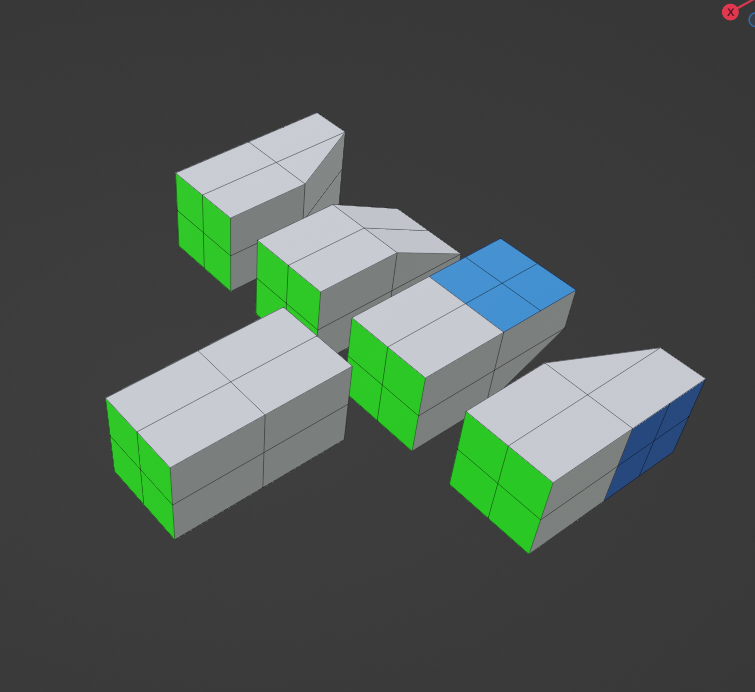
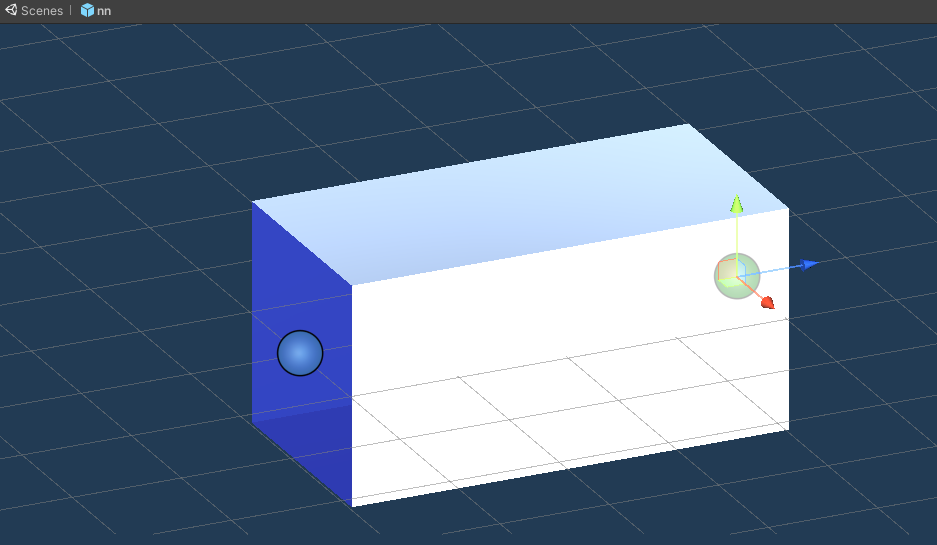
Internally, each track piece is defined by a MapSection object
that specifies its geometry and connection points. The size
constraint is represented by a 3D boolean matrix that tracks which
grid cells are occupied by existing track pieces.
Collision & Placement Validation
Before adding a new track piece, the system verifies that it does not intersect any existing geometry. This validation step prevents impossible or overlapping layouts and helps the generator produce complete racecourses without manual intervention.
Modular Track System
Each track segment is designed as a reusable module with predefined connection points. This modular approach allows new track pieces to be added without changing the generation algorithm, making the system easily extensible for future content.
Challenges
One of the biggest challenges was balancing randomness with playability. Simply selecting random connecting pieces often produced awkward layouts or impossible tracks, so the generator needed rules that maintained variety while ensuring every generated course remained navigable and enjoyable to play. These rules introduced small restrictions that limited randomness, but were necessary to keep generated racecourses playable.
Lessons Learned
This project strengthened my understanding of procedural generation,
algorithm design, and Unity development. I learned how breaking a
complex problem into smaller validation steps made the process
easier to understand and debug. It also demonstrated how relatively
simple rules can combine to produce complex and unpredictable
results.
If I continued this project, I would expand the generation system
with weighted track selection, biome-specific themes, and smarter
pathfinding techniques to create more varied, natural-looking
racecourses.
Gallery
Future Improvements
- Introduce biome-specific themes and environments
- Implement weighted track selection for more natural layouts
- Improve generation performance for larger racecourses
- Export generated tracks for reuse or sharing
Social